“I used to think poetry – and religion too – was about describing the transcendent…but these days, I find myself more and more interested in language that pays attention to tangible things.” Padraig O’Tuama
Before sunrise, I stand barefoot on wooden floorboards in a quiet kitchen. Flakes of steelcut oatmeal drift into the bowl, bringing hints of Irish soil.
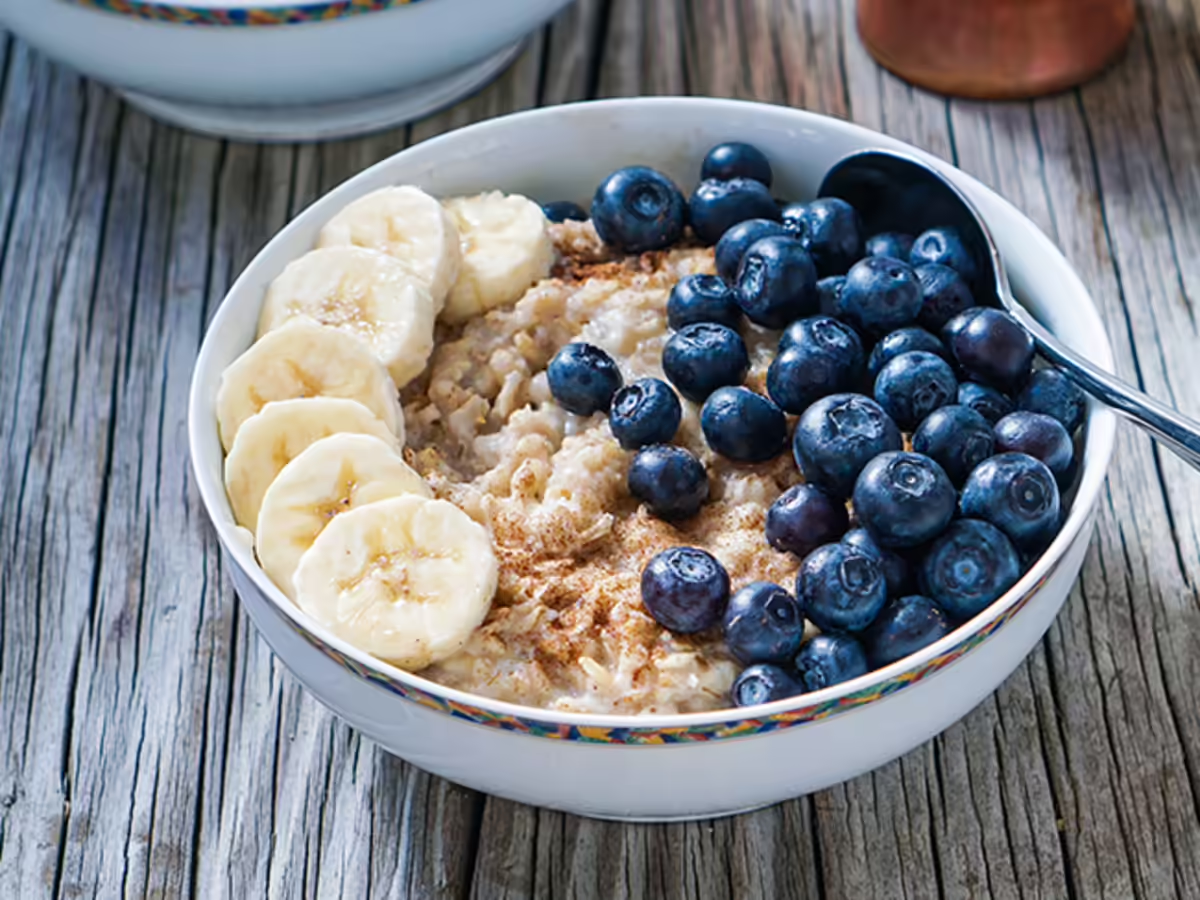
As the oatmeal cooks, I rinse ripe, round blueberries in a steel colander.
In summer, fresh picked peaches drip nectar into the bowl. In winter, bright yellow banana rinds open to offer thin slices of soft fruit.
The coffee grinder whirs, milk steams, my lucky owl mug brims as I settle at the wooden kitchen table.
Cocooned in my daily ritual, I open my journal to write.
When a baby is born there is no talk of shields needed to guard the soul.
Rather, when a child is born gentle words of welcome, soft downy blankets, and warmed milk are the order.
But, when should we begin to equip a child for the harshness of other children’s words? the loneliness of rejection? the sting of parental disapproval?
When is it time to warn young girls of male ill intentions?
Is there a good moment to reveal the earth’s scars wrought by human hands?
Or is it best to stay swaddled and safe for as long as possible?
*Inspired by No’u Revilla’s “When You Say Protesters Instead of Protectors”.
Visible from space, the world’s largest dam measures more than seven football fields. Constructed over generations, the dam holds back run off from Canada’s Birch Mountains.
Shaped in an arc, the dam is composed of connected arches. Through brutal cold, blizzards of snow, the force of gravity, the dam remains.
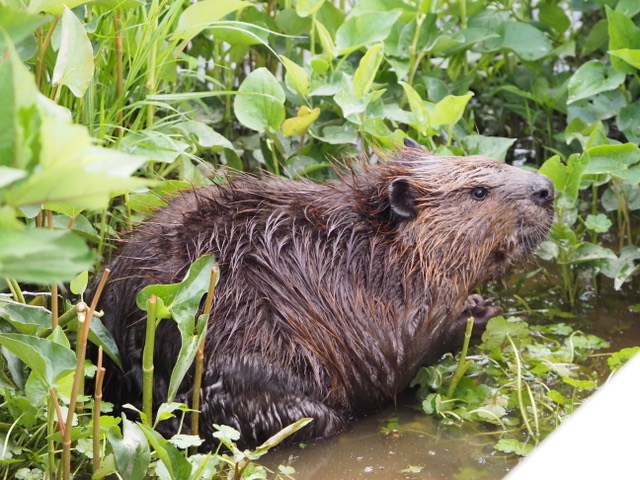
In 1978, beavers returned to a patch of woods in Fairfax, Virginia. Setting to work, the builders began to shape a wetland.
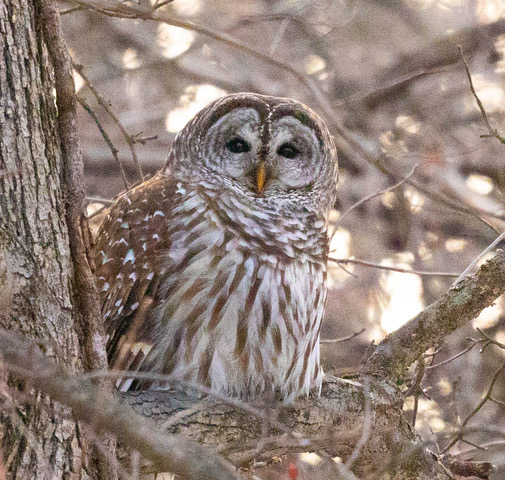
Today’s massive ecosystem owes it origins to those first beavers — red-shouldered hawks, barred owls, coyote, fox, tree frogs, ribbon snakes, marbled salamanders, belted kingfisher, yellow crowned night herons.
This morning I watched a lone beaver leave his lodge, floating on the surface of a warming pond.
Sixty degrees appears tempting, even for a nocturnal creature.
Evidence of spring dots the margins of the wetland — robins, frogs, and freshly felled trees.
Soon, the beaver will be joined by family members who swam the pond last spring, ready to repair and renew.
My father hates L.A. Growing up on Livonia Avenue, Los Angeles was a place of deficit for him — little money, a father lost at seventeen, a strict Jewish upbringing, a family circle limited by the Holocaust.
On the other side of town, my father tells the story, a cousin was a hotel doorman where Howard Hughes resided. Hughes helped the cousin’s son into medical school when school after school rejected the Jewish young man. Success was serendipity.
For my father at seventeen, long hours bagging at a grocery store helped pay his family’s bills — no Hughes or good luck story.
Instead, he worked, studied, scrimped, saved to pull himself over the horizon of Los Angeles. Discrimination, death, circumstance marked this son of an immigrant’s path.
My father hates L.A. But for me, L.A. is a classroom in which to learn about overcoming.
The stove is off, you can let go your constricting grip on safety. I forgive you for continuing to carry the habit. I forgive you for holding a grudge grounded in hurt. I forgive you for hours spent worrying, with no real power to change. I forgive you for wanting — trying to fill a hole of murky origins. I forgive you for the hovering masked as parental care. I forgive you for wondering if you are enough. I forgive you, I forgive you, I forgive you.
*inspired by Dilruba Ahmed’s poem “Phase One”. In the poem, Ahmed repeats, in a flood, I forgive you — making a safe space for the acknowledgement of things that hide in the shadows for each of us.
Over winter break, my family was in New York City. Crowded with holiday revelers, New Yorkis a wonder. On this trip, the universe threw me a moment, a connection.
Through the glowing windows, The Strand bookstore looked packed. Shoppers searching for gifts to bestow on loved ones, wrapped in tinsel and crinkly paper.
Biting cold on a late December eve, made the claustrophobic scene almost inviting.
Skirting around strangers, I settled at the staff favorites table – books in a kaleidoscope of colors stacked high in piles, allowing shoppers to grab several titles at once.
In my hand, a hefty paperback offering tales from India. “Remarkable!” came a bubbly voice to my left. Startled, I mumbled I heard great things. “Have you tried this one?” She held up a fast-paced thriller I too had loved. “Yes!” I exulted. Reaching in front of her, I scooped up another title from the beach of books. “Well, you must try this one. History, family intrigue, I know you will love it!”
We paused — complete strangers, now sharing treasures with assured confidence, we knew each other.
In the pause, I could imagine the recipes we traded, the afternoons spent watching our children play ball, chatting in book club or crying over a lost loved one.
We both grinned, “Happy holidays” as the universe tugged up back into our own orbits, each quietly contemplating the possibilities.
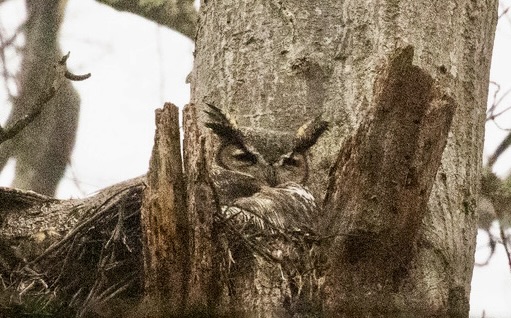
I like ocean-polished shells, I like pine cones scattered on the path, I like freshly felled trees — a beaver’s dinner, I like spotting the outline of an owl nestled in a pine tree pre-dawn, I like watching a fox slink down a darkened street, I like tiny frogs camouflaged against large pond fronds, I like a ruby red cardinal on a bare winter branch, I like a rugged path opening to the sea, I like smooth river stones washed by clear water, I like the surprise of a bear standing in a meadow, I like the quiet of a morning marsh, I believe I was designed to dwell in the natural world.
This poem is modeled after the British poet Lemn Sissay’s “Some Things I Like (A Poem to Be Shouted)”. In the poem, Sissay offers a list of quirky, disparate likes. Yet in the end, Sissay’s list offers a theme — he appreciates the displaced, the discarded. As a child he went from foster home to foster home. He wrote a list that offers memoir too (poem published in Padraig O’Tuama’s Poetry Unbound).
For the past year or more, I have headed out in heat, rain, and freezing temperatures to spend time with birds. I am learning much about life, survival, beauty. Thus, I find myself writing more nature poems these days. Nature poems are often idyllic — lofty language offering peace, escape, a calm refuge. But some poems are frank, not shying from the natural order. In January, I saw two geese on a frozen pond I frequent — here is the encounter.
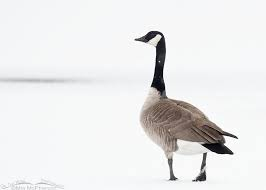
On a frigid January morning, a flock of Canadian Geese huddle on the icy marsh, heads tucked in against the cold.
As the sun rises, light settles on a goose several yards away.
It is clear the goose perished in the night. Ebony head melding into the ice, wings loose and low, no life blood holding the bird in check. A gentle neck bends with grace across the frozen field.
Nature takes its course. Geese are not promised eternity. Perhaps a fox, coyote or eagle will find a meal and fortitude.
But not yet, for standing guard by the fallen fowl is love personfied.
Geese mate for life. The ice-bound goose did not die alone. Instead nature reminds everyone within sight we are cherished — from the tiniest warbler to the majestic goose to the infinitely fallable human.
Yet, a prayer should be offered for the sentinel left behind — loved paired lonely carrying on mightily.
Note: if you love birds, here are a few great books to read: Bird School by Adam Nicolson What an Owl Knows and The Genius of Birds by Jennifer Ackerman The Backyard Bird Chronicles by Amy Tan H is for Hawk by Helen Macdonald
Striding through dappled afternoon light in the New Jersey Pine Barrens, I kept pace with my grandmother.
From time to time, my naturalist grandmother would call out Latin names for leafy plants — Gentiana autumnalis, Drosera filiformis — her eyes roaming the details of petal, stem, color.
My eyes, however, rested on my grandmother’s hand, stuffed deep in her coat pocket. She smiled at my notice, withdrawing a perfect glossy seashell.
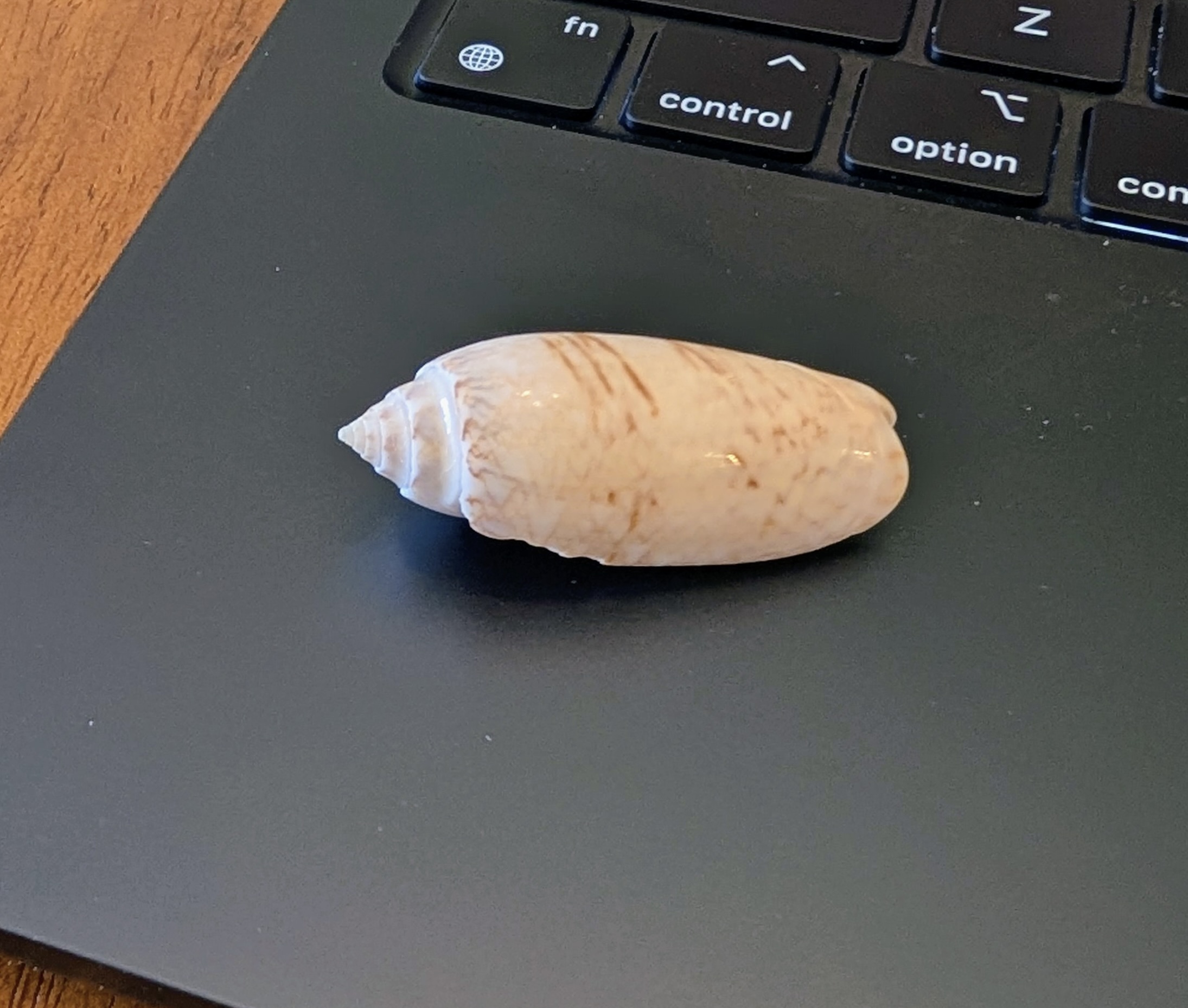
Small, round, rolled, the milky shell bore the stripes of a tiger. If you are ever worried, she intoned, you can give your worries to the shell – the effect is like magic.
Grandmother handed me her shell. Keep this in your pocket. You will find it easier to carry a small shell than the weight of your worldly worries.
Even now, my thumb travels over the smooth surface of the Olive shell, discarding detritus, just as my grandmother did four decades ago.






 A Reading Life