I rise in the dark
shower,
walk the dogs,
pack lunch,
head to work —
all done in silence.
My love lies sleeping,
the hour is too early
for my dogs to care about barking.
My ritual is efficient —
all to get me here,
seated at a table
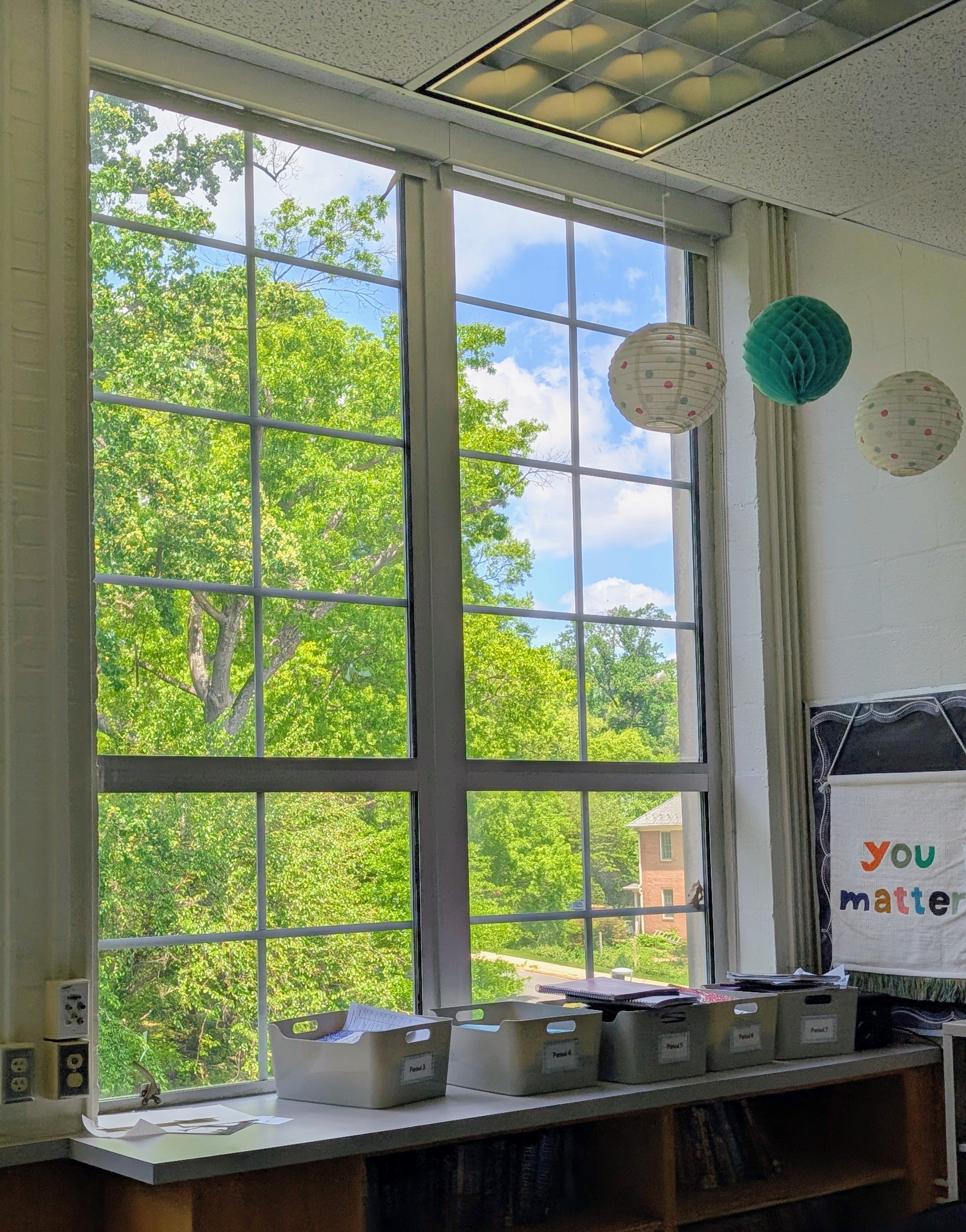
gazing through double-storied windows
upon a waking spring day.
Crisp air
carries returning warblers
verdant trees,
sway in the breeze —
a green so rich,
the color drips in the painted landscape.
Wisps of clouds
ease across an ocean blue sky.
Here the silence is reverent,
comforting,
all encompassing.
Balanced,
I can begin the day.